
Ola Electric, one of India’s leading electric mobility companies, is once again making headlines — this time with its entry into the electric car segment. After prioritizing its mass-market electric scooters for the past few years, the Bengaluru-based EV manufacturer has now filed a patent for a compact electric car, signaling a major expansion into the E4W (Electric Four-Wheeler) category.
If successful, this could mark a pivotal shift in India’s affordable EV landscape — one currently dominated by models like the Tata Tiago EV, MG Comet EV, and the upcoming VinFast Minio Green.
A Homegrown Innovation: Gen 4 Platform and Indigenous 4680 Cells
The foundation of Ola’s upcoming small electric car lies in its Gen 4 modular platform, first unveiled during the company’s Sankalp 2025 event. The flexible platform is designed to underpin multiple vehicle categories — from scooters and three-wheelers to compact and mid-size electric cars — giving Ola a scalable advantage in manufacturing and cost optimization.
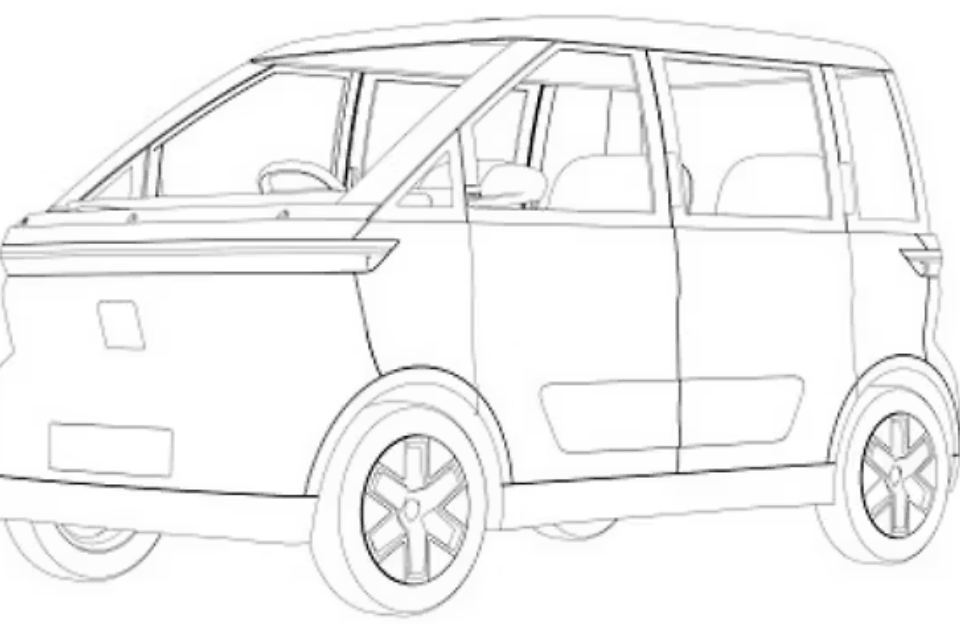
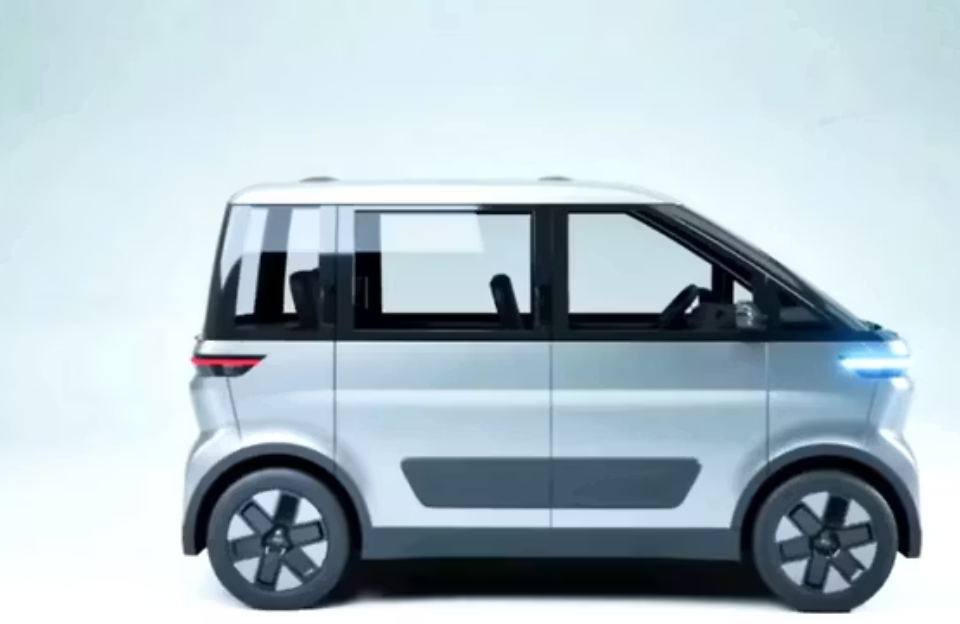
The patent images reveal a five-door compact hatchback, with clean proportions and a city-friendly design. Its small footprint and upright stance suggest that it’s targeted directly at urban commuters — a rapidly growing segment as India transitions to sustainable urban mobility.
Locally Developed 4680 Series Battery Cells
One of the most crucial aspects of Ola’s compact EV project is the use of indigenously developed 4680 series cells. These cells, showcased at Sankalp 2025, mark a significant milestone for India’s EV ecosystem.
Unlike imported lithium-ion cells used by most manufacturers, Ola’s locally developed 4680 cells — likely featuring NMC (Nickel Manganese Cobalt) chemistry — promise higher energy density, longer lifespan, and lower costs. The localized battery production could drastically reduce Ola’s dependency on foreign suppliers and improve its pricing competitiveness against established rivals.
If executed efficiently, this could position Ola as a true end-to-end EV manufacturer, from cells to final vehicle assembly — a feat few automakers globally have achieved.
Design & Market Positioning: Compact, Urban, and Affordable
From the patent sketches, Ola’s compact electric car appears to adopt a minimalist and futuristic design philosophy — consistent with the brand’s existing design language seen on the Ola S1 scooter range.
With five doors and a tall-hatch silhouette, the EV seems optimized for tight city streets and urban commutes. Expect short overhangs, high ground clearance, and aerodynamic contours that enhance efficiency without compromising practicality.
The model will directly rival:
- Tata Tiago EV – Known for its reliability and wide service network
- MG Comet EV – Popular for its tech-oriented, ultra-compact urban appeal
- VinFast Minio Green – An upcoming competitor from Vietnam targeting budget-conscious EV buyers
Given Ola’s history of aggressive pricing in the two-wheeler space, this car could be priced around or below ₹10 lakh (ex-showroom), positioning it as a high-value, mass-market electric hatchback.
Ola’s Track Record: Lessons from the Scooter Revolution
Ola Electric made a splash in India’s EV market with its S1 and S1 Pro electric scooters, which disrupted the segment with competitive pricing, high performance, and modern connected features.
However, while the scooters gained immense popularity, Ola’s journey wasn’t without turbulence. After-sales service and quality issues hampered customer satisfaction, and the company had to rapidly scale its infrastructure to match the demand it created.
That said, Ola has since invested heavily in building a nationwide service and charging network, as well as improving product reliability. If the company applies these learnings to its four-wheeler venture, it could quickly build credibility in the car market too.
Challenges Ahead: Trust, Competition, and Execution
While Ola’s compact EV project holds enormous promise, the road ahead is anything but easy. The Indian electric car market is becoming increasingly competitive, with established automakers like Tata Motors and MG Motor already enjoying a stronghold in the sub-₹10 lakh space.
Moreover, consumer trust — especially in areas of after-sales service, reliability, and long-term support — remains a key challenge for Ola. Building a strong dealership and service ecosystem for cars will be far more complex than for scooters.
At the same time, new entrants like VinFast, with its Minio Green EV, are aggressively targeting the same segment, promising affordable pricing and innovative design.
Nonetheless, Ola’s integrated EV ecosystem, its battery manufacturing capability, and its experience in large-scale EV production give it a strategic advantage.
Will Ola’s Compact EV Succeed?
Ola’s compact car patent represents more than just a new product — it’s a declaration of intent. The company aims to evolve from a two-wheeler disruptor into a full-fledged electric automaker capable of reshaping India’s mobility landscape.
If Ola can deliver a well-built, affordable, and service-backed electric hatchback, supported by its 4680 cell technology and Gen 4 platform, it could redefine what an Indian-made EV stands for.
But until the prototype turns into a production-ready model and real-world tests begin, the big question remains — can Ola win the trust of car buyers just as it once captured the imagination of scooter enthusiasts?