
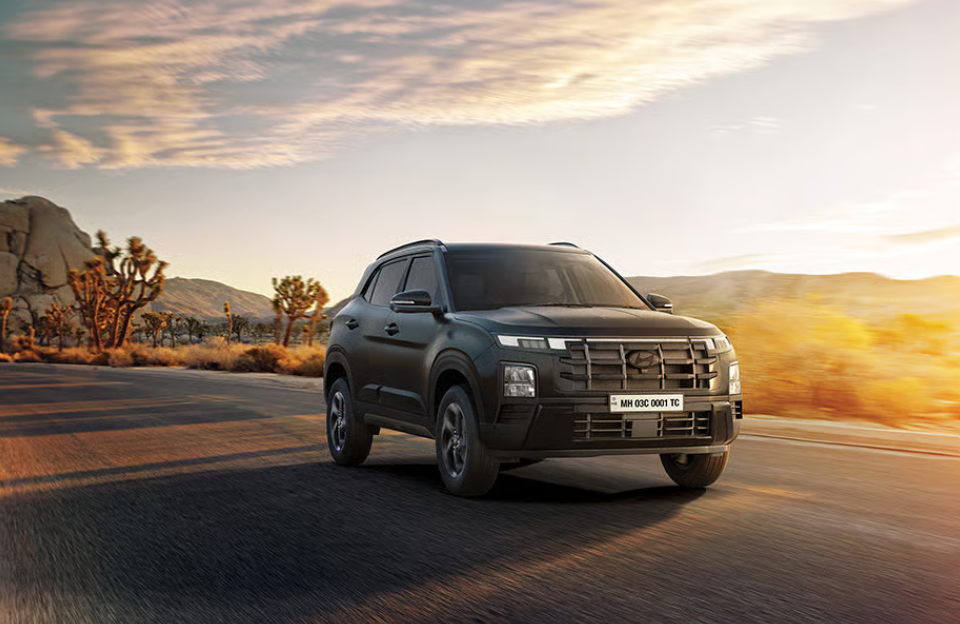
When buyers look at the price of a Hyundai Creta, many wonder why it costs significantly more than smaller cars. The answer largely lies in India’s tax structure. Certain variants of the Creta, produced by Hyundai Motor India, fall under the country’s highest 40% GST slab due to their size and engine specifications.
In India, cars are not taxed at a flat rate. Instead, the Goods and Services Tax depends on factors such as vehicle length, engine capacity and ground clearance. Cars that measure more than 4 metres in length and are powered by larger engines attract higher GST, along with an additional compensation cess. Together, this can push the effective tax rate close to 40%.
The Hyundai Creta fits into this category because it exceeds the 4-metre length threshold and comes with relatively powerful petrol and diesel engine options. Since it does not qualify as a “small car” under government norms, it does not receive the lower tax benefits offered to compact vehicles. The same rules apply to many other mid-size and large SUVs in the market, as well as select hybrid models.
For customers, this higher tax means a noticeable increase in the final purchase price. However, demand for SUVs like the Creta remains strong. Buyers are often willing to pay more for added space, a commanding driving position, modern features and a strong road presence.
The tax policy was originally designed to promote smaller, more fuel-efficient vehicles. Yet, consumer preferences in India have clearly shifted toward SUVs. As a result, even with higher taxation, mid-size SUVs continue to dominate sales charts.
In simple terms, the 40% GST category is based on vehicle dimensions and engine size — and it plays a major role in determining how much buyers ultimately pay.