
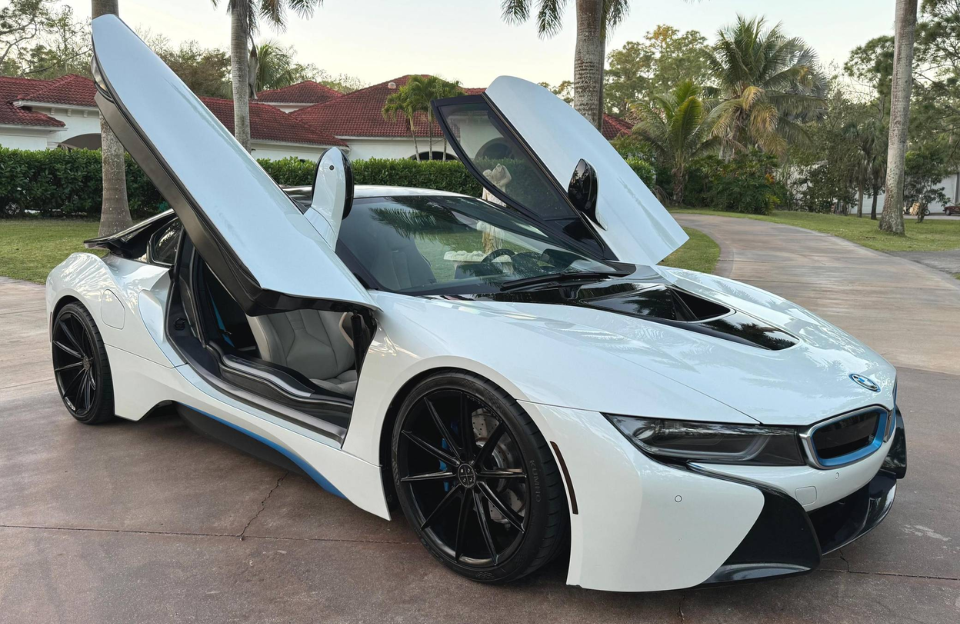
The BMW i8 was not just another sports car—it was a bold statement about the future of performance. When it launched in 2014, it showed the world that hybrid technology could deliver both efficiency and excitement without sacrificing dramatic design.
Inspired by the BMW Vision EfficientDynamics concept first revealed at the International Motor Show Germany in 2009, the i8 carried many concept-like elements into production. Its sleek body, blue highlights, and striking butterfly-style doors gave it a supercar presence that turned heads wherever it went.
But the i8’s appeal went far beyond its futuristic styling. At its core was an innovative plug-in hybrid powertrain. The car paired a 1.5-liter three-cylinder turbocharged petrol engine with an electric motor, producing a combined output of around 362 hp. This setup allowed the car to accelerate from 0–100 km/h in just 4.4 seconds, putting it firmly in sports car territory.
At the same time, the hybrid system helped the i8 deliver impressive efficiency for a performance-focused machine. With fuel consumption figures of around 2.1 liters per 100 km under ideal conditions, it demonstrated how electrification could enhance both performance and sustainability.
Another major highlight was its lightweight construction. The i8 featured a carbon-fiber-reinforced plastic (CFRP) passenger cell combined with an aluminum chassis. This advanced engineering kept weight low and improved handling, making the car agile and responsive on the road.
During its production run from 2014 to 2020, the BMW i8 sold more than 20,000 units globally, making it one of the most successful electrified sports cars of its time. Today, the i8 remains a symbol of innovation—proof that hybrid technology and supercar design can come together to create something truly special.