
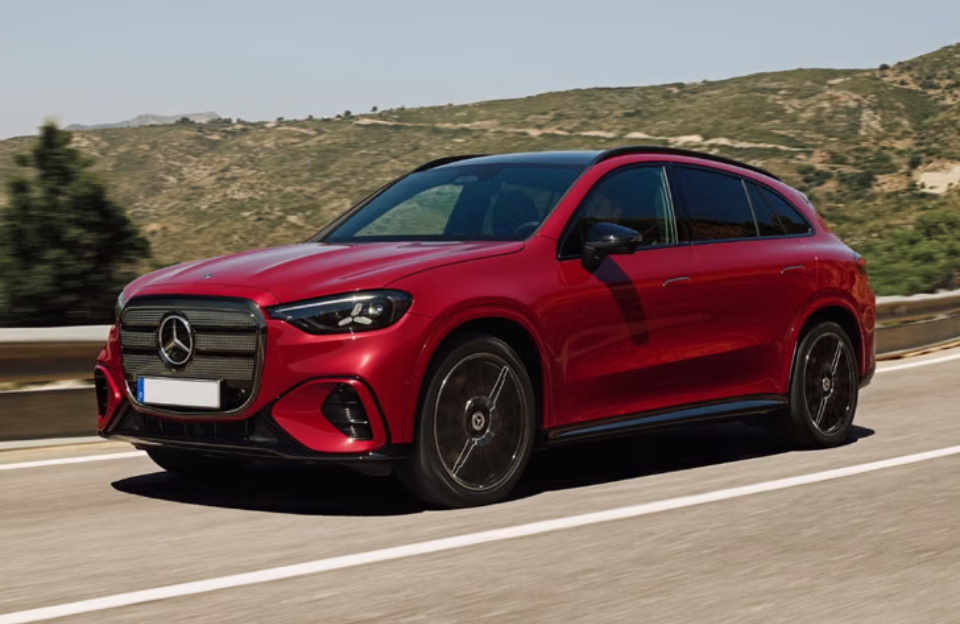
The performance arm of Mercedes-Benz, AMG, has begun development on the sportiest version of the all-electric GLC SUV. Expected to break cover next year, the Mercedes-AMG GLC EV will sit at the very top of the GLC EV lineup and become one of the most powerful models ever produced by the Affalterbach-based brand.
Key Highlights
- AMG version based on GLC EV revealed at Munich
- Gets a three-motor AWD setup
- Will use new cylindrical battery cells, unlike the standard model
Mercedes-AMG GLC EV: Power and Performance
The AMG GLC EV will be powered by three axial-flux motors—one mounted on the front axle and two at the rear—producing a combined output of over 900hp.
For reference:
- Standard GLC EV RWD: 374hp
- Standard GLC EV AWD: 490hp
The AMG’s performance figures will put it in close contention with the range-topping Porsche Cayenne Electric, which uses a dual-motor setup generating over 1,000hp and up to 1,500Nm.
AMG is targeting:
- 0–100kph in under 3 seconds
- Electronically limited top speed of 250kph
The motors and battery system draw heavily from the tech used in the AMG GT XX, which packs a 144kW battery powering three motors with a combined 1,360hp.
Additional performance-oriented features include:
- Simulated gearshift mode, similar to Hyundai Ioniq 5 N
- V8 engine sound simulator for a more emotional driving experience
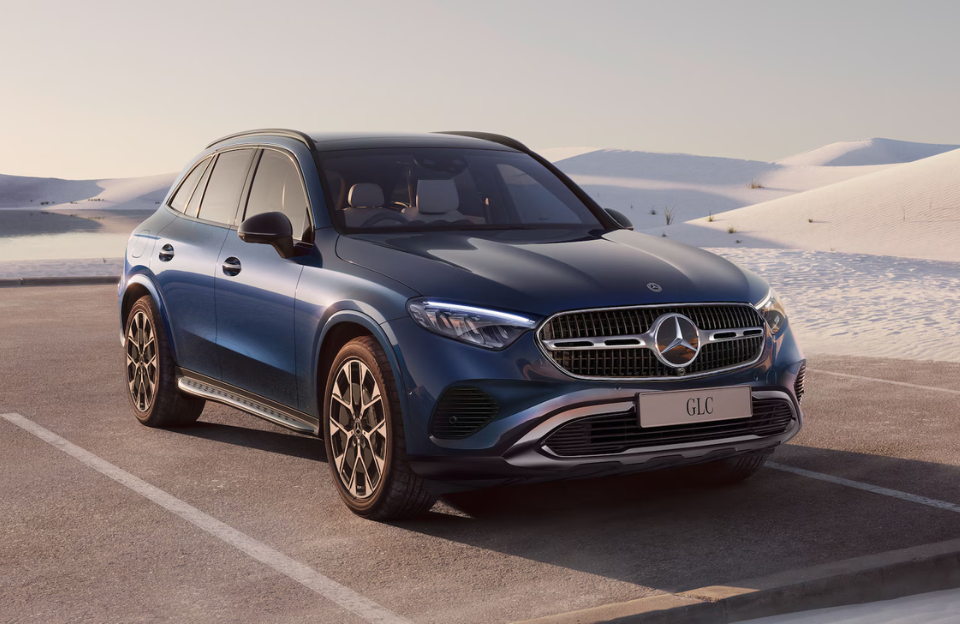
Mercedes-Benz GLC (Current Model Overview)
Price: ₹91.69 – ₹93.67 lakh (on-road)
Range/Mileage: 14.72–19.47 kmpl
Specifications
- Front brakes: Discs
- Rear brakes: Discs
- Length: 4716mm
- 40 more
Features
- Power windows (front & rear)
- One-touch up/down for all windows
- 100 more
Variants
- 2.0 Diesel 220d 4Matic
- 2.0 Petrol 300 4Matic
Mercedes-AMG GLC EV: Battery and Charging Details
Unlike the standard GLC EV, which uses prismatic cells, the AMG variant will switch to new cylindrical cells claimed to offer improved:
- Power density
- Thermal stability
It will also use an 800V battery pack with an advanced direct liquid cooling system, where coolant circulates around each individual cell. This helps maintain ideal temperatures during aggressive driving and sustained high-load usage.
The upgraded thermal management system also:
- Boosts fast-charging capability by up to 70kW, enabling 400kW charging
- Supports the extremeThe performance arm of Mercedes-Benz, AMG, has begun development on the sportiest version of the all-electric GLC SUV. Expected to break cover next year, the Mercedes-AMG GLC EV will sit at the very top of the GLC EV lineup and become one of the most powerful models ever produced by the Affalterbach-based brand.
Key Highlights
AMG version based on GLC EV revealed at Munich
Gets a three-motor AWD setup
Will use new cylindrical battery cells, unlike the standard model
Mercedes-AMG GLC EV: Power and Performance
The AMG GLC EV will be powered by three axial-flux motors—one mounted on the front axle and two at the rear—producing a combined output of over 900hp.
For reference:
Standard GLC EV RWD: 374hp
Standard GLC EV AWD: 490hp
The AMG’s performance figures will put it in close contention with the range-topping Porsche Cayenne Electric, which uses a dual-motor setup generating over 1,000hp and up to 1,500Nm.
AMG is targeting:
0–100kph in under 3 seconds
Electronically limited top speed of 250kph
The motors and battery system draw heavily from the tech used in the AMG GT XX, which packs a 144kW battery powering three motors with a combined 1,360hp.
Additional performance-oriented features include:
Simulated gearshift mode, similar to Hyundai Ioniq 5 N
V8 engine sound simulator for a more emotional driving experience
Mercedes-Benz GLC (Current Model Overview)
Price: ₹91.69 – ₹93.67 lakh (on-road)
Range/Mileage: 14.72–19.47 kmpl
Specifications
Front brakes: Discs
Rear brakes: Discs
Length: 4716mm
40 more
Features
Power windows (front & rear)
One-touch up/down for all windows
100 more
Variants
2.0 Diesel 220d 4Matic
2.0 Petrol 300 4Matic
Mercedes-AMG GLC EV: Battery and Charging Details
Unlike the standard GLC EV, which uses prismatic cells, the AMG variant will switch to new cylindrical cells claimed to offer improved:
Power density
Thermal stability
It will also use an 800V battery pack with an advanced direct liquid cooling system, where coolant circulates around each individual cell. This helps maintain ideal temperatures during aggressive driving and sustained high-load usage.
The upgraded thermal management system also:
Boosts fast-charging capability by up to 70kW, enabling 400kW charging
Supports the extremely high discharge rates required for the triple-motor setup
Improves heat dissipation during track sessionsly high discharge rates required for the triple-motor setup - Improves heat dissipation during track sessions