
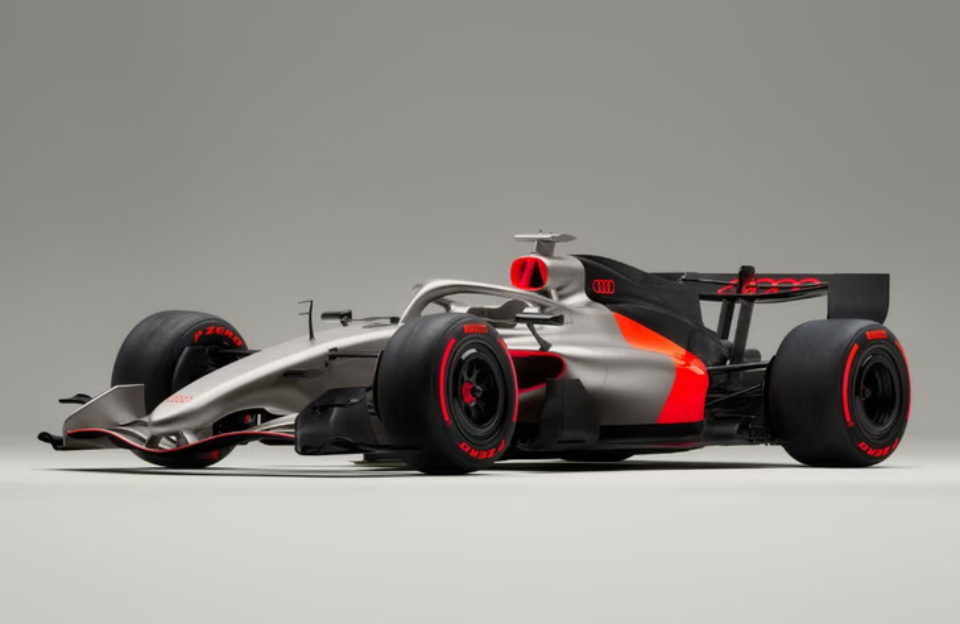
Audi has officially taken a major step toward its Formula 1 debut in 2026 by unveiling the R26 Concept, a striking preview of its first F1 car’s livery. The reveal took place at the Audi Experience Center in Munich, marking the beginning of the German automaker’s next big motorsport chapter.
The R26 Concept doesn’t represent the final race car itself, but instead showcases the official livery design and visual identity that Audi’s F1 machine will wear when it joins the grid next year. The final, race-ready car will be unveiled in January 2026, while the 2026 F1 season kicks off on March 8 with the Australian Grand Prix.
A Minimalist Yet Aggressive Livery
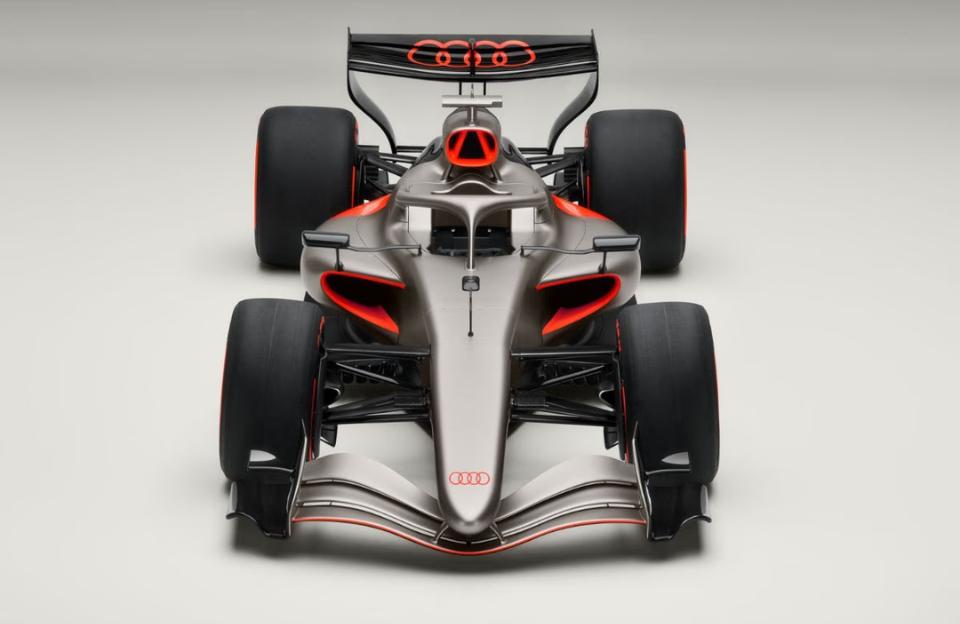
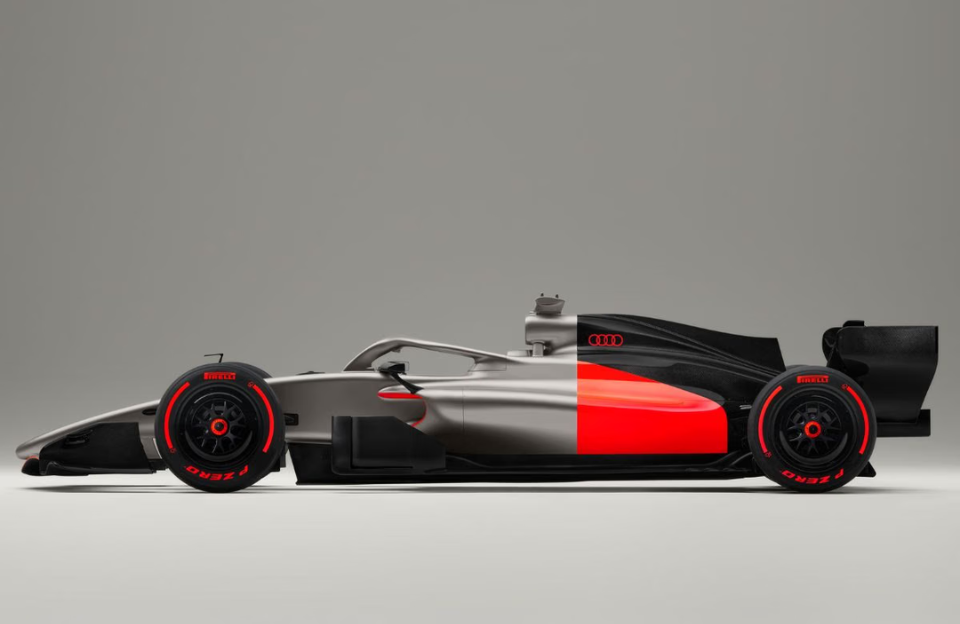
The R26 Concept’s design perfectly captures Audi’s hallmark precision and performance ethos. The livery combines three signature colours — red, black, and silver — evoking the brand’s motorsport heritage while symbolizing its new direction in Formula 1.
- Red represents performance and passion, long associated with Audi Sport’s DNA.
- Black adds contrast and aggression, signifying strength and focus.
- Silver, the classic Audi hue, links back to the “Silver Arrow” legacy that has defined German motorsport for decades.
The clean, minimalist aesthetic aligns closely with the livery seen on Audi’s GT2, GT3, and GT4 racing cars. However, the final F1 livery will incorporate team sponsors and technical partner logos, resulting in a slightly busier design when the official race car is unveiled.
Audi’s F1 Entry: Strategy and Ambition
During the unveiling, Gernot Döllner, CEO of Audi AG, described the brand’s Formula 1 entry as a defining moment for the company’s future:
“Formula 1 will be a catalyst for the change towards a leaner, faster, and more innovative Audi. We are not entering Formula 1 just to be there — we want to win.”
Döllner confirmed that Audi aims to be in F1 title contention by the 2030 season, reflecting the brand’s commitment to long-term competitiveness rather than a symbolic presence.
From Sauber to Audi: A Strategic Transformation
Rather than entering the sport as an entirely new team, Audi will take over Sauber F1, rebranding it as the Audi F1 Team for the 2026 season. This transition provides the brand with an experienced foundation, proven operational setup, and existing Formula 1 infrastructure.
- Jonathan Wheatley, currently the Sauber F1 team principal, will continue in his leadership role under the new Audi banner.
- Mattia Binotto, the former Ferrari F1 team principal (2019–2022), has been appointed Chief Operating Officer and Chief Technical Officer of the Audi F1 programme.
- Drivers Nico Hülkenberg and Gabriel Bortoleto are expected to remain with the team through the transition, ensuring continuity in development and testing.
This strategic takeover allows Audi to integrate its engineering philosophy and racing culture into an already functional F1 structure — accelerating the learning curve that new teams often face.
In-House Powertrain Development: A Bold Move
Unlike several rival teams sourcing engines from established suppliers like Mercedes-AMG, Honda, or Ferrari, Audi is investing heavily in developing its own in-house powertrain for Formula 1.
This hybrid system, being developed at Audi’s Neuburg Motorsport Centre, will adhere to the FIA’s 2026 power unit regulations, which place a stronger emphasis on sustainability and electrical efficiency.
Key highlights of Audi’s powertrain project include:
- A 50:50 power split between the internal combustion engine (ICE) and electric motor output.
- Use of sustainable synthetic fuels for the ICE component.
- Development of advanced energy recovery systems (ERS) for superior performance and efficiency.
This independent approach underscores Audi’s goal to become a full-fledged F1 manufacturer, controlling both chassis and engine — a distinction shared by only a few elite teams in Formula 1.
2026 Formula 1 Season: New Rules, New Rivals
The 2026 Formula 1 season marks a major regulatory overhaul by the FIA, aimed at increasing competitiveness, reducing carbon emissions, and cutting costs.
Key changes include:
- Completely new chassis regulations for lighter, more agile cars.
- Revamped power unit architecture emphasizing hybrid energy recovery.
- Increased use of sustainable fuels and recyclable materials.
Alongside Audi, Cadillac Racing will also make its Formula 1 debut in 2026, fielding a team with drivers Valtteri Bottas and Sergio Perez. Together, these two new entrants will bring a fresh wave of competition to the championship, joining traditional powerhouses like Red Bull, Mercedes, Ferrari, and McLaren.
Audi’s Vision: Redefining Performance and Innovation
Audi’s entry into Formula 1 isn’t merely a marketing move — it’s part of a broader strategy to reshape its global identity around electrification, innovation, and sustainable high performance.
Through the F1 programme, Audi aims to:
- Advance electrification technologies for future road cars.
- Strengthen its engineering credibility in the performance car space.
- Reinforce its “Vorsprung durch Technik” (Progress through Technology) philosophy on a global motorsport platform.
With Audi’s R26 Concept setting the visual tone, anticipation is building for the January 2026 debut of the brand’s fully functional Formula 1 car — the machine that will mark Audi’s long-awaited return to top-tier open-wheel racing.
Verdict: The Start of a New Motorsport Era
The unveiling of the Audi R26 Concept livery symbolizes far more than just a design reveal — it marks the beginning of a new motorsport era for Audi. Backed by a proven racing team, cutting-edge technology, and a clear roadmap to victory, Audi’s F1 ambitions look both credible and compelling.
When the lights go out in Melbourne on March 8, 2026, the world will witness not only a new Formula 1 season but also the rebirth of a legendary German marque at the pinnacle of global motorsport.