
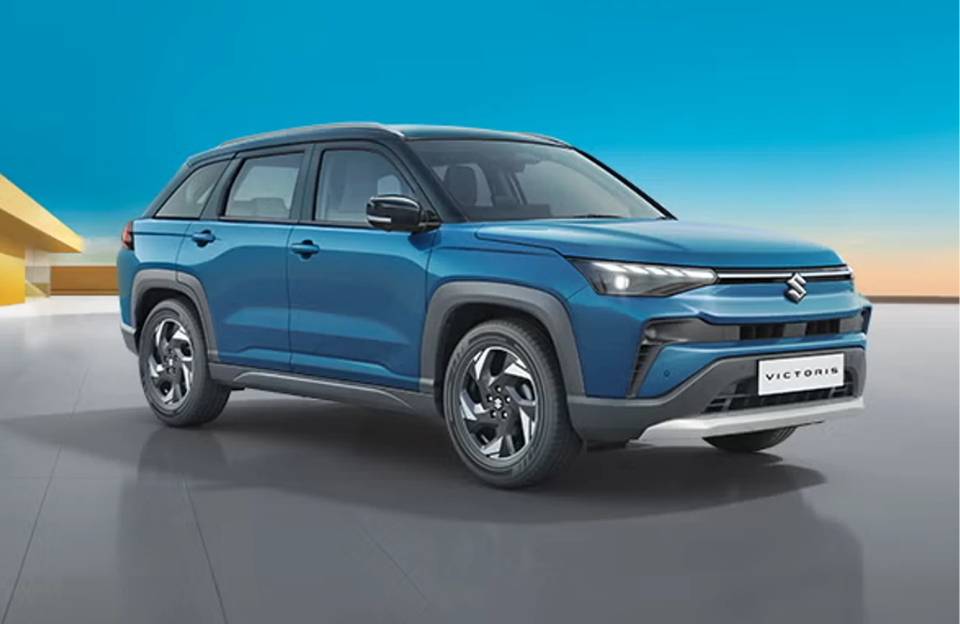
Maruti Suzuki’s newest entrant in the mid-size SUV segment, the Victoris, has taken the Indian automotive market by storm. In just a few months since launch, the Victoris has managed to outperform its more premium sibling, the Grand Vitara, in monthly sales for October 2025.
According to Maruti Suzuki’s latest sales report, the Victoris achieved 13,496 units sold in October, overtaking the Grand Vitara’s 10,409 units for the same month. This milestone underscores the brand’s effective product and retail strategy, positioning the Victoris as a volume driver in one of India’s most competitive SUV segments.
Arena vs. Nexa: A Dual-Channel Success Story
Although the Victoris and Grand Vitara share the same platform, powertrain options, and overall dimensions, their dealership positioning and target audiences differ sharply.
- The Maruti Suzuki Victoris is retailed through Arena dealerships, which cater to a broader, mass-market audience.
- The Grand Vitara, on the other hand, is sold via Maruti’s premium Nexa network, designed for more upmarket buyers.
This dual-retail strategy appears to have paid off handsomely. By introducing the Victoris under the Arena banner, Maruti has effectively widened its customer reach, attracting buyers who aspire to own a mid-size SUV but prefer a more accessible and affordable option.
In contrast, the Grand Vitara continues to appeal to customers seeking a more premium ownership experience — offering higher trims, richer materials, and a Nexa-exclusive service network.
Victoris vs. Grand Vitara: What’s Different?
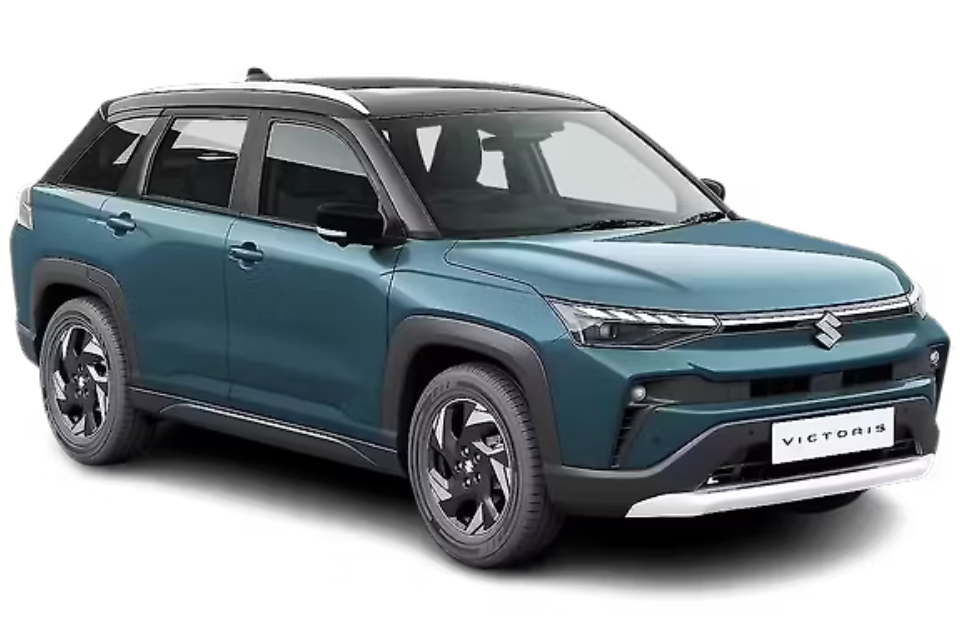
While both SUVs are built on the Suzuki Global-C platform and share mechanical components, Maruti has cleverly differentiated the Victoris with subtle design and feature variations.
The Victoris features:
- A slightly more robust, adventure-inspired styling.
- A simplified feature list in base trims to keep prices aggressive.
- Arena-specific colour palettes and accessories to appeal to first-time SUV buyers.
Meanwhile, the Grand Vitara retains its upmarket positioning, with:
- Distinctive LED lighting elements.
- Soft-touch interior surfaces.
- Exclusive hybrid trims and Nexa signature colours.
Despite their similarities, Maruti has effectively positioned the Victoris as the value-oriented alternative, targeting cost-conscious families and younger buyers who prioritize practicality over luxury.
Segment Performance: Creta Leads, Victoris Gains Fast
The Indian mid-size SUV market remains one of the most fiercely contested segments, with major players like Hyundai, Kia, Toyota, and Honda vying for dominance.
Here’s how the key models performed in October 2025:
| Model | Units Sold (October 2025) |
|---|---|
| Hyundai Creta | 18,381 |
| Maruti Suzuki Victoris | 13,496 |
| Maruti Suzuki Grand Vitara | 10,409 |
| Toyota Hyryder | 11,555 |
| Kia Seltos | 7,130 |
While the Hyundai Creta continues to dominate as the market leader, the Victoris has emerged as a formidable challenger, outselling both the Kia Seltos and its close cousin, the Toyota Hyryder, which shares its hybrid powertrain.
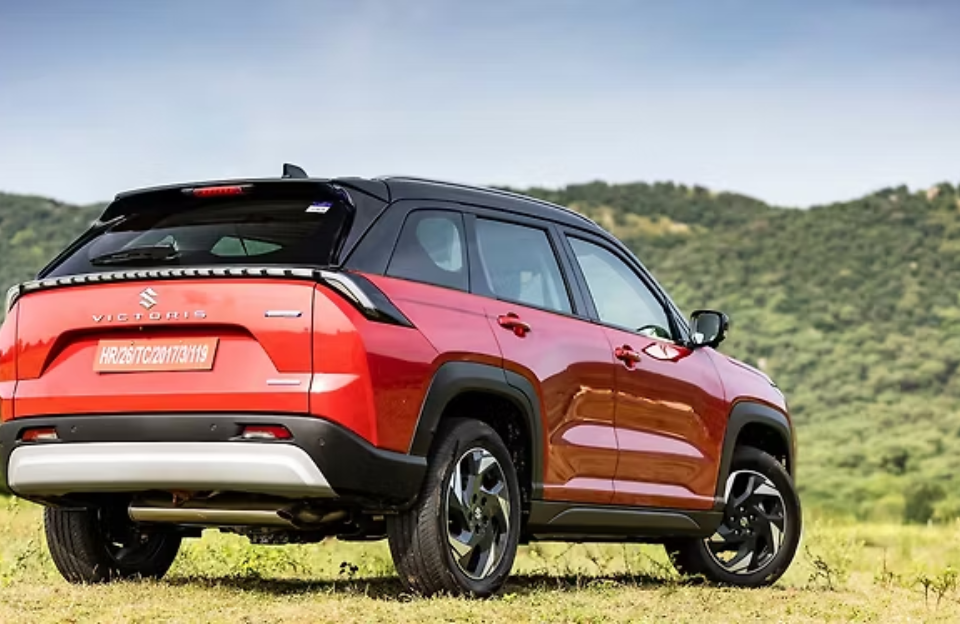
This performance not only highlights the strength of the Victoris brand but also demonstrates how Maruti’s aggressive retail strategy has allowed it to capture new customers who may have otherwise considered rival models.
Powertrain Options and Pricing
Both the Victoris and Grand Vitara come with a range of engine and fuel options tailored to diverse customer needs.
- 1.5-litre K15C Petrol (103hp, 137Nm) with 5-speed manual or 6-speed automatic.
- 1.5-litre Smart Hybrid (mild hybrid) for improved efficiency.
- 1.5-litre CNG option (88hp) for customers prioritizing running costs.
The Victoris starts at Rs 10.50 lakh (ex-showroom), while the Grand Vitara is priced slightly higher, from Rs 10.77 lakh (ex-showroom).
By positioning the Victoris at a slightly lower entry point and through the mass-market Arena network, Maruti has ensured that the SUV appeals to a wider customer demographic — particularly those upgrading from compact SUVs like the Brezza or Hyundai Venue.
Maruti’s Growing Influence in the SUV Segment
Over the past three years, Maruti Suzuki has transformed from being a hatchback-dominant brand to a formidable force in the SUV market. The success of models like the Brezza, Grand Vitara, Fronx, and now the Victoris, reflects Maruti’s expanding influence across multiple SUV sub-segments.
With the Victoris’s impressive sales start, the company now enjoys a commanding presence in both mass and premium SUV categories, solidifying its market share against Korean and Japanese rivals.
Outlook: Victoris Set to Strengthen Maruti’s Market Leadership
The strong sales momentum of the Maruti Suzuki Victoris suggests that the SUV is well on its way to becoming one of the brand’s best-selling models in 2025–26.
With competitive pricing, a wide service network, and the trust associated with the Arena brand, the Victoris is strategically positioned to appeal to India’s largest car-buying segment — value-driven families looking for SUV practicality with Maruti’s reliability.
As Maruti continues to expand its SUV portfolio with upcoming models like the eVitara electric SUV and the next-gen Brezza, the Victoris’s early success serves as another reminder of the brand’s unmatched ability to dominate every price bracket it enters.