
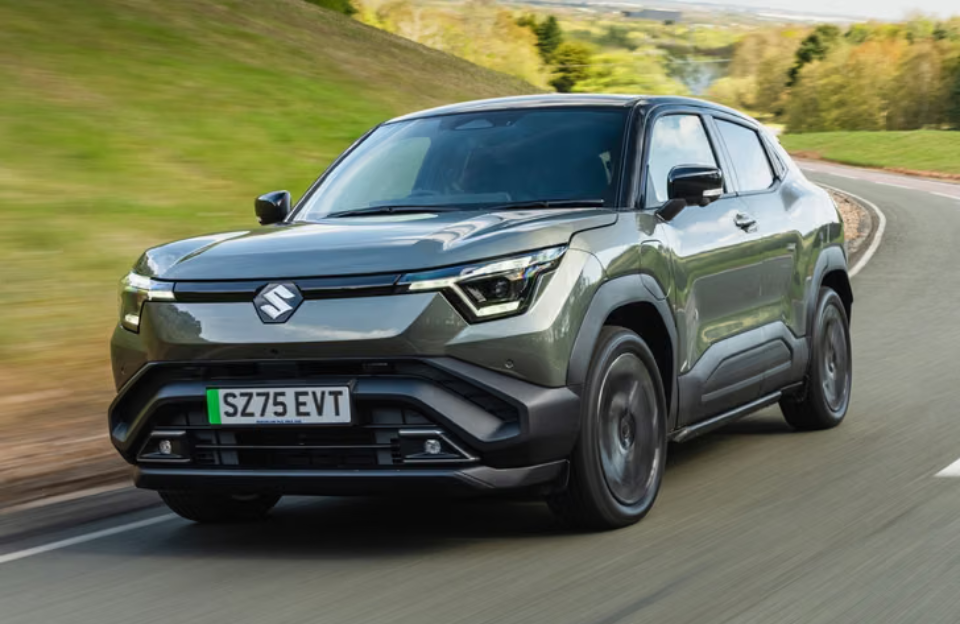
Maruti Suzuki is finally stepping into the electric future with its first all-electric SUV — the Suzuki e Vitara. After months of anticipation, the e Vitara has begun rolling on European roads, giving us the first taste of what’s to come when it lands in India next month. With its arrival, Maruti will square off against a new wave of rivals like the Hyundai Creta Electric, marking a new era in India’s mainstream EV landscape.
A Critical Step Forward for Suzuki
For Maruti Suzuki, the e Vitara is more than just an EV — it’s a necessity. In India, it strengthens the company’s electrification strategy, while in Europe, it helps Suzuki meet stringent fleet emission norms. Until now, the lack of an EV in its lineup had forced Suzuki to pull models like the Jimny off European shelves.
Built on Suzuki’s new Heartect-e platform, the e Vitara represents a fresh chapter in the brand’s evolution. Interestingly, the EV will be manufactured exclusively in India and exported to international markets, underlining the country’s growing role as a global EV production hub.
Exterior Design and Engineering – 7/10
Muscular, Confident, and Distinctively Suzuki
The e Vitara’s design blends Suzuki familiarity with futuristic confidence. It’s not a rebadged model but a standalone product, featuring a sharp, muscular stance that gives it a modern yet robust character.
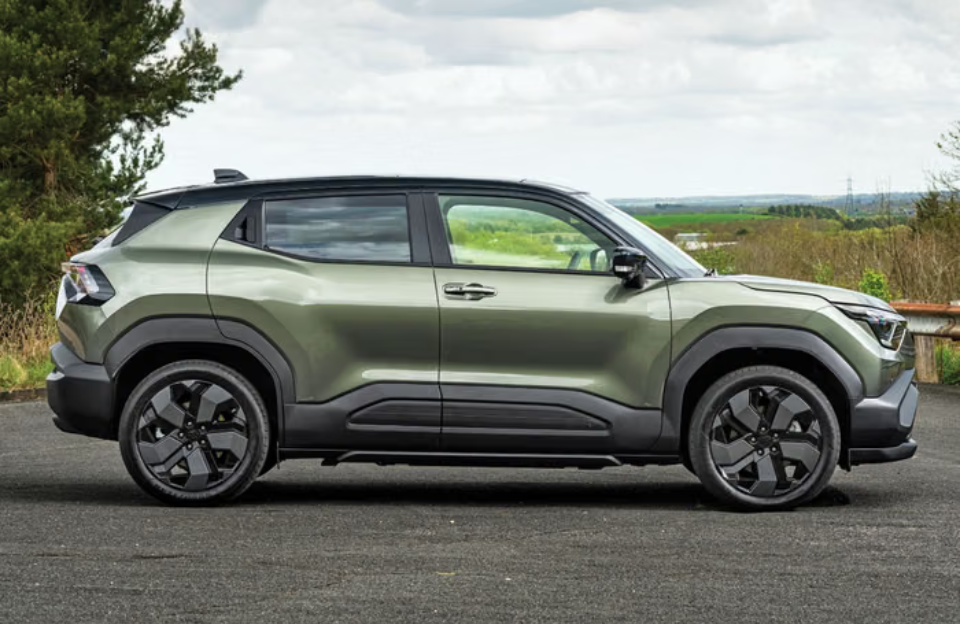
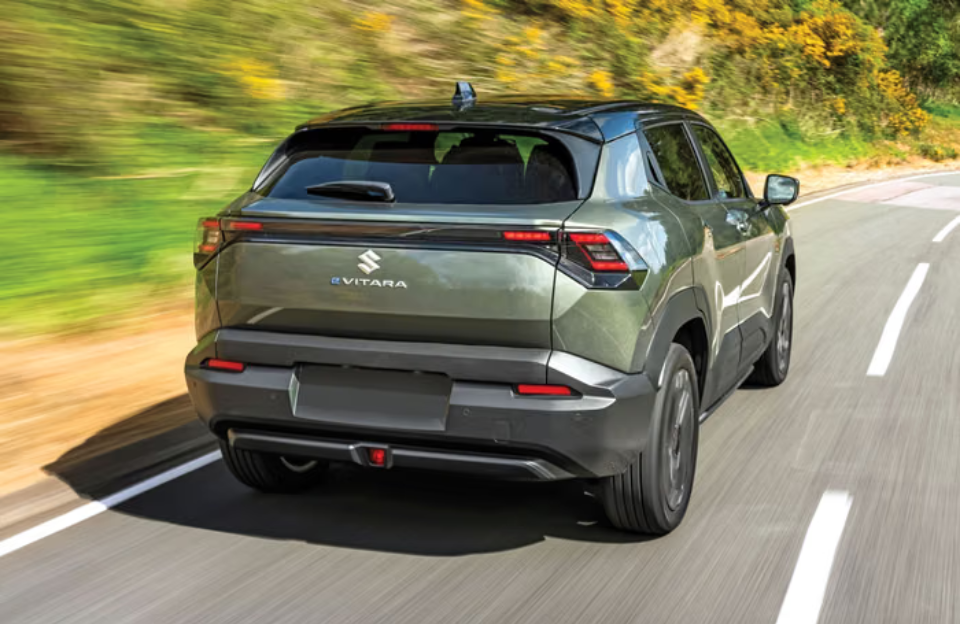
Up front, the sculpted bonnet and strong shoulder lines are complemented by aero-optimized 19-inch wheels and bold cladding that accentuate its SUV presence. The rear design is equally assertive, featuring angular LED tail lamps linked by a transparent bar — a refreshing alternative to the connected light bar trend that dominates modern EVs.
While it rides on a dedicated EV platform, there are still traces of internal-combustion DNA, especially with the front-mounted motor layout on the 2WD variants. True to Suzuki’s engineering ethos, however, the e Vitara feels thoughtfully packaged and solidly built.
Key Dimensions:
- Length: 4,275mm
- Width: 1,800mm
- Height: 1,635mm
- Wheelbase: 2,700mm
- Ground Clearance: 180mm
- Boot Space: 238–306 litres
Interior Space and Comfort – 6/10
Comfortable Front Seats, Tight Rear Headroom
The Suzuki e Vitara scores high on material quality and fit-finish — a refreshing change from Maruti’s usual cost-conscious interiors. The front seats are supportive and well-contoured, though wider frames may find them a little snug.
Rear passengers get decent legroom, thanks to sliding second-row seats, but headroom is limited due to the sloping roofline. Taller passengers will find it tight, even with the reclined seatback.
The boot capacity is modest at 238 litres, expanding to 306 litres when the seats are slid forward — still small compared to rivals. Maruti claims the India-spec model will get a slightly larger trunk due to a reworked underfloor tray, though expectations should remain realistic.
Practicality features include cup holders, a central storage box, and an open cubby under the floating centre console.
Features and Safety – 8/10
Tech-Loaded, Premium, and Well-Built
Inside, the e Vitara feels more upscale than any Suzuki before it. The dashboard design breaks away from tradition with its asymmetrical layout, pushing the centre console slightly toward the passenger side.
A unique design quirk is the offset instrument cluster and infotainment screen, both housed under a single glass panel but set at different heights. It’s visually unconventional, though ergonomically manageable.
Notable Features Include:
- 10-inch touchscreen infotainment system
- 10-inch digital instrument cluster
- 360-degree camera system
- Wireless Android Auto and Apple CarPlay
- Wireless charger
- Powered driver’s seat
- Infinity sound system with subwoofer
- Sunroof and ambient lighting
Safety is comprehensive, with 7 airbags, ABS with EBD, and a full ADAS suite offering adaptive cruise control, lane-keeping assist, and autonomous emergency braking.
Performance and Refinement – 7/10
Linear, Calm, and Predictable
The e Vitara offers two battery configurations — a 49kWh unit paired with a 144hp motor and a larger 61kWh battery producing 174hp and 189Nm. There’s also a dual-motor AWD variant delivering 184hp and 300Nm, though the Indian version will likely be limited to front-wheel drive.
Despite its strong numbers, performance feels linear and composed rather than punchy. The 0–100kph sprint takes a claimed 8.7 seconds, but the initial throttle response is subdued, prioritizing smoothness over aggression.
While this may disappoint enthusiasts expecting instant torque, it aligns with Suzuki’s intent to make the e Vitara an easygoing family EV. On highways, however, wind and tyre noise are noticeable, hinting at moderate cabin insulation levels.
Braking performance is strong, with all-round disc brakes and adjustable regenerative braking. However, adjusting regen levels via the touchscreen and console button feels unnecessarily complex — steering-mounted paddles would have been more intuitive.
Powertrain Specs:
- Battery: 61kWh LFP
- Power: 174hp
- Torque: 189Nm
- Range: 428km (WLTP)
- 0–100kph: 8.7s (claimed)
- Charging: 10–80% in 45 mins (70kW DC)
Ride Comfort and Handling – 8/10
European-Style Firmness with Confidence
The Suzuki e Vitara rides and handles more like a European crossover than a typical Maruti. The suspension setup is firm, lending it impressive stability and composure through corners.
At lower speeds, the ride can feel a bit stiff, which could make Indian road conditions a challenge. Still, the steering is well-calibrated — light at city speeds and reassuringly weighted on highways.
The balanced chassis and mature dynamics make the e Vitara feel planted, predictable, and confidence-inspiring — qualities that will likely appeal to those upgrading from conventional SUVs.
Range, Efficiency, and Charging – 7/10
Realistic Range, Not Class-Leading
The e Vitara uses LFP blade cells, which are safer and easier to manage thermally but less energy-dense. Suzuki claims a 428km WLTP range for the 61kWh version and 344km for the 49kWh unit.
For India, Maruti promises a 500km+ certified range, though this figure is based on a different testing cycle. Expect a real-world range closer to 400–420km under typical driving conditions.
Charging times stand at 5.5 hours (11kW AC) for a full charge or 45 minutes (70kW DC) for an 80% top-up.
Verdict – 7/10
A Confident First Step for Maruti Suzuki EVs
The Suzuki e Vitara marks a pivotal step for Maruti Suzuki as it enters the electric era. It may not be the most spacious or the quickest in its class, but it’s refined, well-built, and easy to live with — qualities that will appeal to everyday users transitioning from petrol and diesel SUVs.
Its design feels fresh, the cabin quality is impressive, and the feature list is comprehensive. Yes, the rear headroom and boot are limited, and its performance is not electrifying, but as a well-rounded, global EV, it sets a strong foundation for Suzuki’s electric future.
When it arrives in India, expect the 41kWh variant to start around Rs 17 lakh, undercutting the base Hyundai Creta Electric, while the 61kWh top-end model could stretch to Rs 24 lakh.
With the e Vitara, Maruti Suzuki and Hyundai will go head-to-head once again — this time on the electric battlefield.